Shop the video
The True Spring fall capsuletwelve pieces, one rule
You have a red you love and a green you love, and the one time you wore them together you caught yourself in a window and thought: oh no, holiday card. It isn’t the colors — they’re both yours. Your palette hands you three colors named after nothing but themselves — your red, your color note, your blue — and never once tells you how many belong in one outfit. Here’s why that matters: only two of your ten colors are quiet enough to step back, so when two loud ones share a room, nobody leads. That’s the holiday card, and it’s also why cornflower and tomato red feels busy even with the word Christmas nowhere near it. The rule underneath it: one loud color per outfit. Camel and warm ivory do the rest.
The pieces below are Amazon links, and Your Style Hue earns a commission if you buy through one — at no extra cost to you. Nothing here is paid placement. Each piece was chosen because its color actually matches the shade it sits under. Most come in a dozen colors, so check the one on Amazon matches before you buy.
The twelve pieces · tap one to jump to it


Wear it
Three outfits from the twelve.
Put together from the pieces on this page, so every one works with the rest. Tap a piece to see it on Amazon.
Your red, with camel
Tomato red is the one loud color here. Camel pants and boots let it do the talking.
Cornflower and warm white
Your blue on the biggest piece, warm ivory at your face, honey as the finish.
Leaf green, easy
Green is the only color. Warm white jeans and honey keep it relaxed.


01 · Your anchor neutral
Camel
In most palettes, the anchor is the darkest, steadiest color in the closet — the one everything else takes its cue from.
Why this worksLess
Camel isn’t dark at all, and it anchors this palette in a completely different way: it’s the one color you can put next to anything and nothing happens. Not muted, not shouting — just quiet enough that tomato red, leaf green and cornflower all get to be loud around it without a fight. A trench is the biggest, most repeated silhouette a capsule can build around, so it’s the piece to get right first, not the one you add on at the end. It comes back twice more before this page is through.
02 · Your white
Warm Ivory
Every other color on this page sits at roughly the same weight, which is exactly the problem this whole capsule is built to solve.
Why this worksLess
Warm ivory is the one real break — it’s lighter than everything else here, and it’s lighter by a lot, which is what makes it read as a genuine rest rather than just another color in the rotation. A poplin shirt keeps that promise crisp instead of soft, so the gap it opens up stays sharp under the trench or on its own. It’s the piece your eye gets to land on when the rest of the outfit is working hard.

03 · Your red
Tomato Red
Tomato red is your red, full stop — no placement instructions, no “wear it here.” It’s exactly the same weight as leaf green and cornflower, the other two colors on this page with a name and nothing else, which means none of the three gives way when it’s next to one of its siblings.
Why this worksLess
That’s not a flaw; it’s the reason this page exists. A fine knit keeps the color at full saturation instead of dulling it into something safer than what your palette actually gave you. Wear it as the one loud thing in the outfit, and let camel and warm ivory carry the rest.

The one adjacency this page won’t make
Tomato red and leaf green. Both yours.
You just saw them, one after the other — not next to each other, and that’s deliberate. Put them in the same outfit and you get the exact thing that gave this page its rule: a red you love, a green you love, and a window somewhere catching you looking like a holiday card. Nothing is wrong with either color on its own. Together, on you, right now, they read like the fourth Thursday in December. That’s not a flaw in the palette — it’s the reason the rest of this page exists. One loud color per outfit. Keep reading for what that means for cornflower, the third one you haven’t met yet.
04 · Your color note
Leaf Green
Leaf green is your color note — the third of the three colors this palette names after nothing but themselves, no instructions included.
Why this worksLess
It carries exactly the same weight as tomato red, which is the reason the two of them can’t share a room without an eye doing the checking your brain won’t do on its own. On its own, it’s simply a green that’s clearly yours — no grey in it, nothing dusty pulling it toward Autumn. A blouse keeps it light enough to layer under the trench or the cornflower pant without turning into the loudest thing in the room twice.

05 · Your blue
Cornflower
Cornflower is your blue, the last of the three colors your palette names and leaves you to figure out.
Why this worksLess
It takes the biggest piece in this capsule — a wide-leg pant — and it’s allowed to, because in the outfit it belongs to, it’s the only loud color in the room. That’s the real rule underneath the joke about red and green: one loud color can carry as much square footage as you give it, as long as nothing else loud is competing for the same attention. Pair it with warm ivory and camel and it reads exactly as confident as it should.

Five down, seven to go
Not sure which of these is describing you?
That’s the normal answer, and it’s the whole reason the analysis exists. It reads your undertone, depth and contrast from a photograph and tells you which of the twelve seasons you are — which settles whether this palette is yours in about a minute.
06 · Repeats camel
Camel
The anchor, again — camel’s second of three appearances, and the easiest piece on this page to plan around, because it was never going to clash with anything.
Why this worksLess
Pair it with the tomato red sweater for the first outfit or the leaf green blouse for the third, and it does the same quiet job either way: holding the loud color up without competing with it.

07 · Repeats camel
Camel
Camel’s third and last appearance, and it’s smooth leather on purpose.
Why this worksLess
Your own season page is specific about suede pulling you toward Autumn’s softer, dustier textures, and a boot is the piece most likely to arrive in exactly that finish if you’re not paying attention. Smooth keeps the same camel doing the same anchoring job as the coat and the pant, just lower down, without quietly borrowing texture from a different season.

08 · Repeats warm ivory
Warm Ivory
Warm ivory’s second appearance, and its most relaxed one.
Why this worksLess
Where the poplin shirt keeps the color crisp and buttoned-up, a knit tee lets it soften into the piece you reach for on the days none of the three loud colors feel necessary. Wear it under the cardigan or on its own with the straight-leg camel pant, and it does the same quiet resting job the shirt does, just off duty.
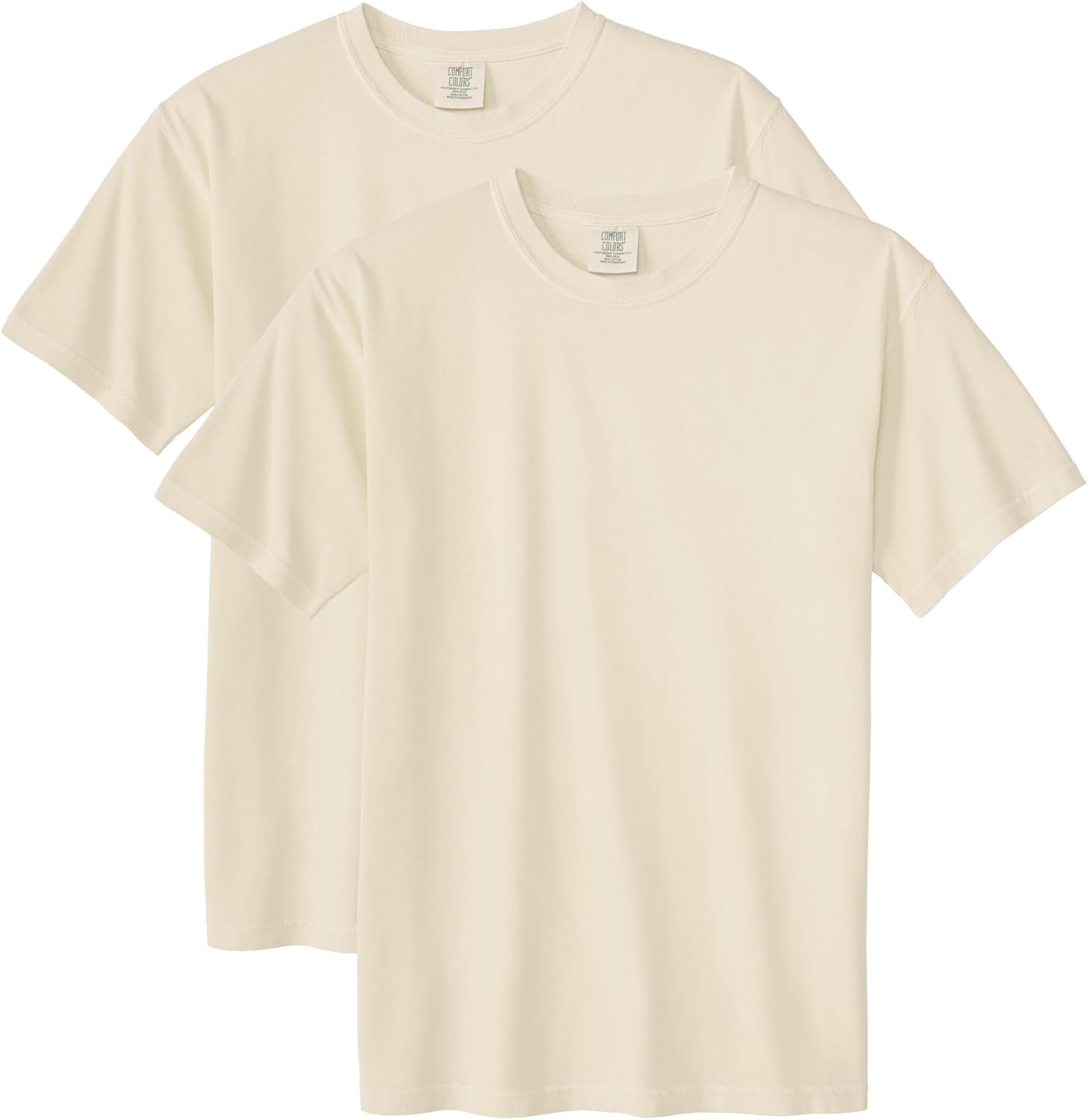
09 · Repeats warm ivory
Warm Ivory
Warm ivory’s third appearance, and the one your own season page is most specific about: denim in a warm white or a warm light wash, never a stark, cold one.
Why this worksLess
A stark white or true optic denim would fight the same warmth every other piece on this page is built around, so this stays soft and warm instead — the base layer three different outfits get built on top of.

10 · Honey, worn as a color
Honey
Honey is the gold in your palette, and here it’s doing double duty — first as a color, worn the way you’d wear any other piece on this page, no metal involved.
Why this worksLess
A shoulder bag is the easiest way to carry a whole extra color without adding a whole extra outfit decision; it sits with the camel, the warm ivory, or either of the loud three and never once looks out of place.

11 · The one metal
Honey
Honey’s second appearance, and this time it’s a metal rather than a color.
Why this worksLess
Yellow gold is your metal — it’s named, not argued, the same way it is everywhere else on the site. Small hoops finish an outfit instead of adding to the conversation the three loud colors are already having; they’re here to complete the look, not join in on it.

12 · The second quiet color
Robin’s Egg
Robin’s egg is your other quiet color, and it’s the only piece on this page built to sit next to one of the loud three without an argument starting.
Why this worksLess
Where tomato red, leaf green and cornflower all shout at the same volume, this one steps back the way warm ivory does — which is exactly what makes it worth its own slot instead of just being camel or warm ivory again. A fine knit cardigan goes over the leaf green blouse in the third outfit and quietly proves the whole rule works both directions: one loud color, one quiet one, and nothing shouting twice.

The rule underneath it
It was never about the red and the green.
True Spring gets five colors with a job attached, same as every season on the site. Camel is your anchor neutral. Warm ivory is your white. Then three colors named after nothing but themselves: tomato red is your red, leaf green is your color note, cornflower is your blue. Those five are the first five pieces on this page, and they’re the ones worth getting exactly right before anything else — everything that follows is built to sit around them, not add to them.
Then the jobs run out, and there are still seven pieces left to buy. None of the seven bring in a new idea — every one of them repeats a color you already have. Camel comes back twice more, on the straight-leg pant and the boot. Warm ivory comes back twice more too, on the tee and the jeans. Honey shows up as a bag and as your metal in a pair of earrings. Robin’s egg blue is the only genuinely new color in the whole back half of the capsule, and even it isn’t new work — it’s here to do the same quiet job warm ivory does, just in a different color.
Here’s the part that makes the whole rule necessary in the first place. Out of True Spring’s ten colors, only two are quiet enough to step back — warm ivory and robin’s egg. Every other color, including all three of the ones named for themselves, sits at full strength. On a palette with more quiet colors to spare, you can wear two loud ones at once because one of them gives way. True Spring can’t do that. Put two full-strength colors in the same outfit and nobody leads, which is exactly what a red sweater and a green blouse feel like on a person — not because it’s Christmas, but because nothing in either color is built to step back for the other.
Which is why the twelve pieces split into exactly three outfits, and each one carries precisely one of tomato red, leaf green or cornflower. The trench, the sweater, the jeans and the boots put tomato red right at the top, where it does the most work. The cornflower pant takes the biggest piece in outfit two, and it’s allowed to, because it’s the only loud color anywhere in that look. The leaf green blouse gets its turn in outfit three, alongside camel and robin’s egg. Look closely and the red sweater and the green blouse never once turn up in the same outfit — not an accident, and not a coincidence you’re meant to notice only if you go looking for it.
None of this is really about red and green. Count the quiet colors in your own palette — the dusty ones, the greyed ones, the ones that already know how to sit back. If you land on one or two the way True Spring does, your palette is handing you the same instruction: one strong color at a time, camel-and-warm-ivory equivalents doing the rest. The colors change from season to season. How many of them get to be loud in the same outfit does not.
Still deciding
Common questions.
- Twelve pieces but only five jobs — what are the other seven doing?
- Repeating. Camel shows up three times — the trench, the straight-leg pant, the boot. Warm ivory shows up three times too — the shirt, the tee, the jeans. Honey turns up twice, once as a color and once as a metal. Only honey and robin’s egg bring in anything that wasn’t already doing one of the five jobs, and even honey is mostly just your gold, worn twice in two different ways. Twelve pieces coordinate because five colors keep reappearing, not because there are twelve different ideas in play.
- Why only one strong color per outfit — isn’t that restrictive?
- It sounds like a rule, but it’s really just a description of what your palette can carry. Only two of your ten colors — warm ivory and robin’s egg — are quiet enough to step back and let something else lead. Every other color, including all three of your named-for-themselves ones, is at full strength. Put two loud colors in the same outfit and neither one gives way, which is the holiday-card feeling in a sentence: nobody’s leading. One loud color, with camel and warm ivory underneath it, gives your eye exactly one thing to look at instead of two things arguing for the same attention.
- My palette has ten colors — why only seven here?
- Marigold, Persimmon and Coral aren’t in this capsule, and it’s not because they’re wrong for you. All three are built to be the loudest thing in whatever outfit they’re in — a one-piece-at-a-time job, not something a twelve-piece foundation gets built around. A capsule needs colors willing to repeat quietly in the background, and a color whose entire purpose is to stand out doesn’t do well showing up three times. Wear all three — just not as the base everything else sits on.
- Can I really never wear the red and the green together?
- You can — this page just isn’t going to pretend it won’t read as a holiday card, because on you, it will. Tomato red and leaf green are both genuinely yours, and your eye doesn’t check the palette before it reacts to two full-strength colors sharing a neckline. The rule was never really about red and green specifically — it’s about how many loud colors get to be in a room at once, and for you, that number is one. Cornflower and tomato red would feel just as busy together, and that has nothing to do with the holidays.
- I’m not a True Spring — is any of this useful?
- The colors won’t transfer, but the method will. Count the quiet colors in your own palette — the dusty ones, the greyed ones, the ones that don’t shout. If you come up with one or two, your palette is telling you the same thing this one tells a True Spring: wear one strong color at a time, whatever season you actually are.
Before you go
Get the rest of your season’s shopping list.
One short letter every few weeks — the pieces, the colors and the swaps for your season specifically, not all twelve. No spam, and you can leave whenever you like.
Issue 02 · September 2026Fall only sells you two redsRead it first
More for True Spring
Your picks in the other guides.
- The fall wedding, by seasonYour pick: Cornflower blue
- You can change your top. You can’t change your blush.Your pick: Coral Crush
- The right scarf color for your color seasonYour pick: The burnt orange
- The fall jacket, by seasonYour pick: The ginger
- Date night, by seasonYour color is in this guide
- Rust or wine? The deep red for your color seasonYour pick: Rust or wine
- The fall sweater, in the color that is actually yoursYour pick: A greyed olive-tan
- The right wash of jeans for your color seasonYour pick: The clear midwash
- The right red lipstick for your color seasonYour pick: Tomato
- The best white for every color seasonYour pick: Warm Cream
- The best coat color for every color seasonYour pick: Camel
- The best blazer color for every color seasonYour pick: Ink Navy
Not True Spring? Pick another season
Don’t know which one you are?
Find your season in a minute.
Upload a portrait and the analysis runs entirely in your browser. Your photo never leaves your device — there’s no server to send it to.
Find my colorsUndertone, depth and contrast are what decide which of the four neutrals is yours. The analysis measures all three rather than asking you to guess from a description.