Shop the video
The best white for every color season
White is the one color nobody thinks about. It is on every basics list, it is the shirt you buy without trying on, and it is the reason a lot of perfectly good wardrobes have a tee in them that never gets worn. Because white is not one color. It runs from blue-white to butter, and where you sit on that line is decided by the same coloring that decides everything else. Here are the four whites, and which of them is yours.
The tops below are Amazon links, and Your Style Hue earns a commission if you buy through one — at no extra cost to you. Nothing here is paid placement. Each piece was chosen because its color actually matches the shade it sits under. Most come in a dozen colors, so check the one on Amazon matches before you buy.
The answer for every season · tap yours

01 · If your coloring is high contrast
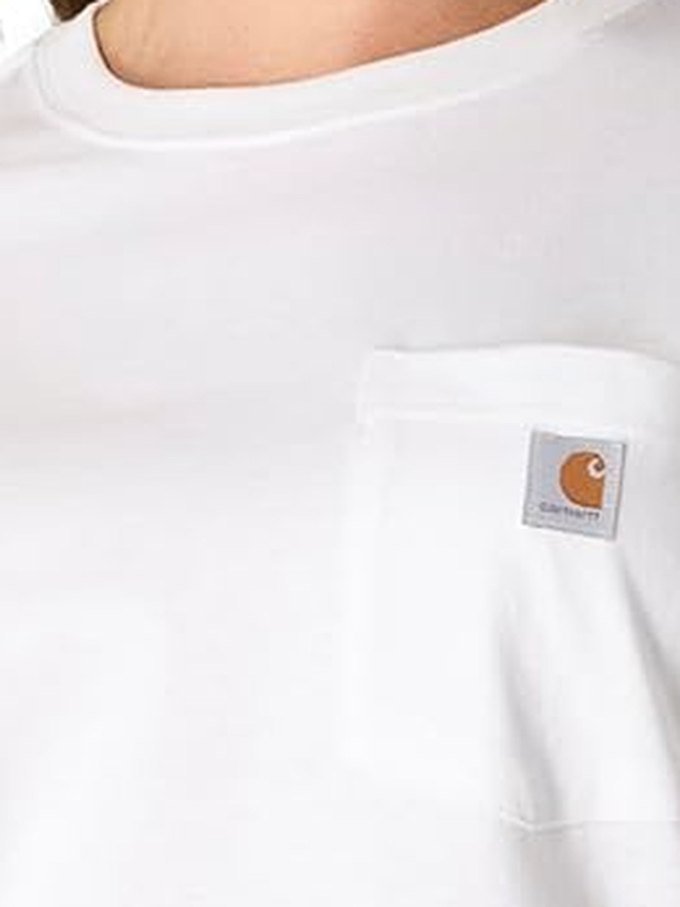
Optic White
This is the white on the shelf — the one every basics guide means.
Why this worksLess
Three of the twelve seasons wear it at full strength, and they are the same three whose palettes name Snow White outright. If your hair, your eyes and your skin sit far apart from each other in a photograph, optic white holds that contrast instead of softening it. The crispness you have been told is “clean” is doing real work on your face.
The seasons
02 · If your coloring is cool and soft
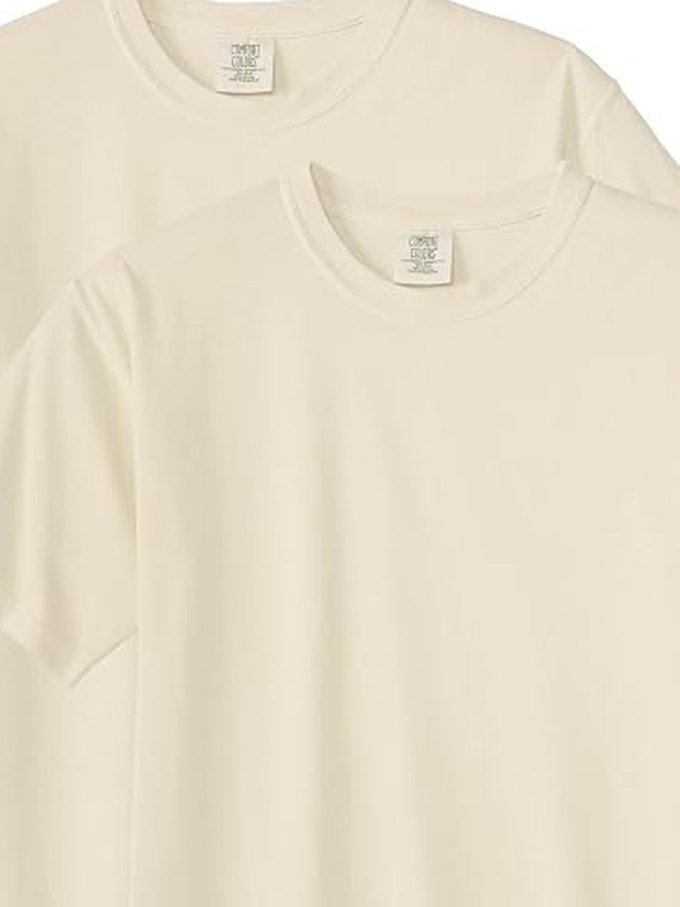
Cool Ivory
Cool coloring without the contrast needs a white with the blue taken out and no yellow put back in.
Why this worksLess
That is a narrow gap, and it is exactly where your own palette already sits — Light Summer names it Cool Ivory, True Summer calls it Bone, and Soft Summer’s self-test is titled “pure white or ivory?” outright. Optic white does not clash with you. It just pulls the color out of your face and leaves the shirt looking newer than you do.
The seasons
Two down, two to go
Not sure which of these is describing you?
That’s the normal answer, and it’s the whole reason the analysis exists. It reads your undertone, depth and contrast from a photograph and tells you which of the twelve seasons you are — which settles the blazer question in about a minute.
03 · If your coloring is light, warm and clear
Bright Ivory
Light, warm, clear coloring wants a white with the lights still on.
Why this worksLess
Bright ivory carries warmth without going soft, so it keeps the clarity optic white gives the winters and hands it to you at your own weight. Light Spring’s page puts it better than we can: the optic white looks clinical and slightly blue against your skin, and the cream makes you look rested.
The seasons
04 · If your coloring is warm and muted
Warm Cream
This is the one that explains the tee you never wear.
Why this worksLess
Chalk white is a cool white; yours has butter in it. Warm, muted coloring gets exactly the same lift from cream that a winter gets from optic white — the same job, at your temperature. It is also why the $20 tee in your white beats the $200 one in somebody else’s.
The seasons
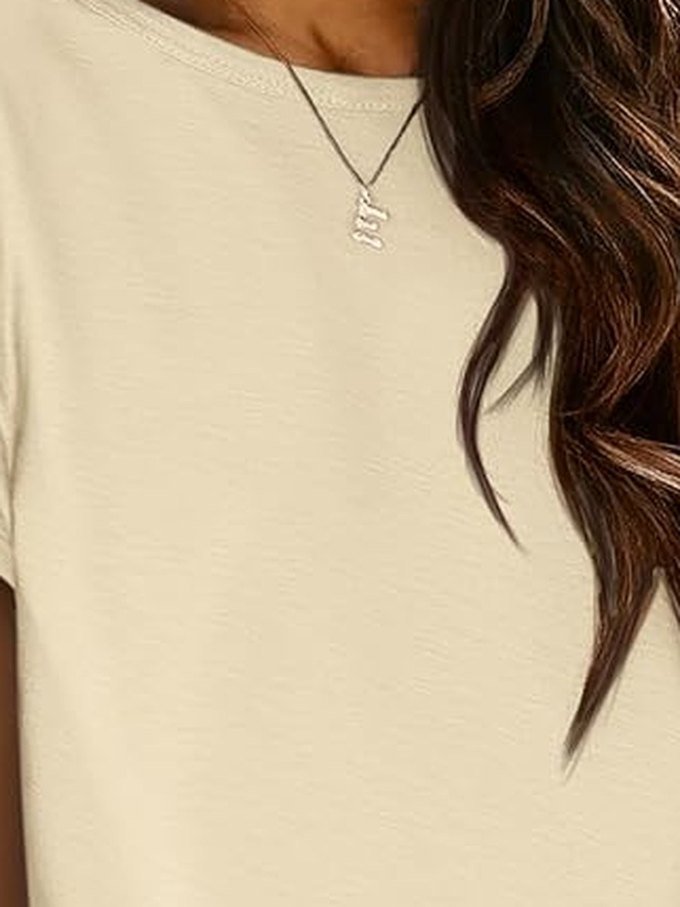
The warm cream tee
ATHMILE basic crewneck tee, Cream
Warm Cream
4.5★ (4,640 ratings)
Shop the warm creamThe rule underneath it
White isn’t a neutral. It’s a color with a temperature.
White gets treated as the absence of a decision — the safe thing, the piece that goes with everything, the one you buy without trying on. That is exactly why it is the most common quiet mistake in a wardrobe. Nobody interrogates a white tee the way they would interrogate a yellow one.
But white splits on the same axis every other color does. Optic white is a cool color — there is blue in it, which is what makes it read as bright. Cream is a warm one. Put the wrong end of that range against your jaw and it behaves like any other wrong color: it drains you, and because the garment still looks clean and expensive, you blame your face instead of the shirt.
The useful part is how far it reaches. Your white is the light end of your whole palette — the tee, the shirt, the knit, the trim on everything, the wall behind you on a video call. Get it right once and every other light neutral you own has something to agree with.
Still deciding
Common questions.
- Why is my best white different from my best blazer color?
- Because they answer opposite questions. The blazer guide asks what replaces black — the darkest neutral you wear near your face. This one asks what replaces optic white at the light end. A season can want espresso at one end and cream at the other with no contradiction at all; they are simply the two ends of the same palette.
- Optic white is on most of the twelve avoid lists. Can I really never wear it?
- You can — it just should not be the thing touching your jaw. Optic white below the waist, under a jacket in your own neutral, or as the second color in a print does nothing to your face. The rule only bites at the neckline, because that is where the light bounces back up at you.
- Bright ivory and warm cream look identical to me. How do I tell them apart?
- Put them next to each other in daylight and the warmer one suddenly looks yellow. On their own, neither reads as anything but “off-white” — which is exactly why this page shows them in sequence. If you only have one to hand, use your own skin: bright ivory keeps its clarity against light coloring, and warm cream goes slightly muddy there.
- Does this apply to shirts and knitwear too, or just t-shirts?
- Everything white you wear at your face — tee, shirt, knit, the collar of a coat. Fabric changes how loud the effect is, because matte cotton scatters light and satin throws it straight back up at you, but the temperature is the same decision every time.
Before you go
Get the rest of your season’s shopping list.
One short letter every few weeks — the pieces, the colors and the swaps for your season specifically, not all twelve. No spam, and you can leave whenever you like.
Issue 02 · September 2026Fall only sells you two redsRead it first
Keep shopping
Everything for your season.
Pick your season to see every guide's answer for you, in one place.
Don’t know which one you are?
Find your season in a minute.
Upload a portrait and the analysis runs entirely in your browser. Your photo never leaves your device — there’s no server to send it to.
Find my colorsUndertone, depth and contrast are what decide which of the four neutrals is yours. The analysis measures all three rather than asking you to guess from a description.