The Journal · Field Guide
The twelve seasons,
read closely.
By the Your Style Hue editors · Published May 19, 2026 · 12 min read
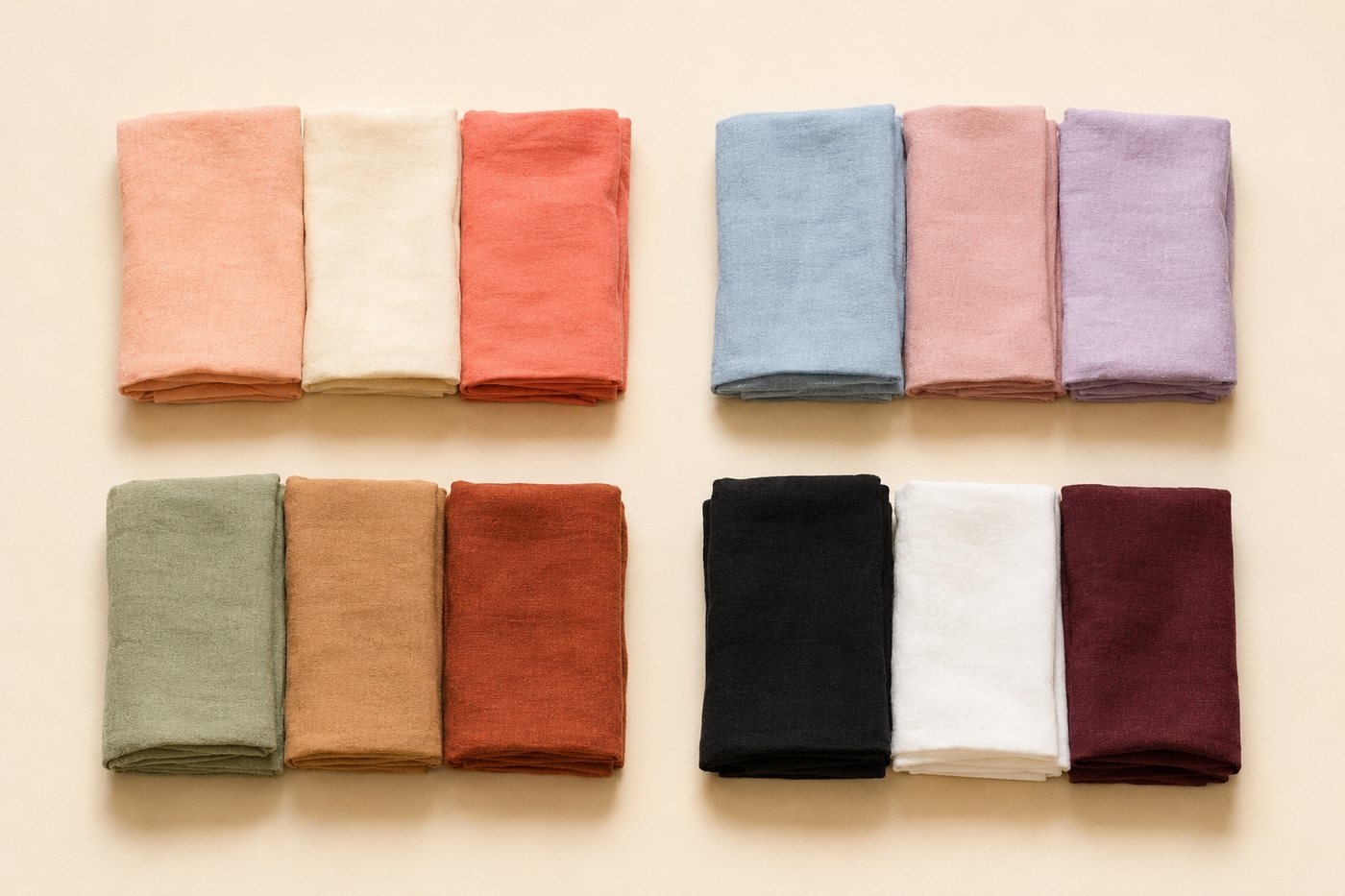
Twelve seasons. One of them is yours. This is a tour through all of them — the underlying logic of the system, what each season looks and feels like, and how they relate.
We'll move through the four parent families first — Spring, Summer, Autumn, Winter — and then break each into its three sub-seasons. If you already know your family but not your sub-season, skip down to that family's profiles. If you have no idea where you fall, the companion article on finding your season at home walks through the diagnostic, or the Your Style Hue reading takes about a minute.
Why twelve, not four
The classic four-season system — devised in the 1980s and popularized by Carole Jackson's Color Me Beautiful — is real, useful, and incomplete. Most people do not fit cleanly into one of the four. A woman with golden hair and fair, pink-toned skin is neither pure Spring nor pure Summer — she falls somewhere along the edge between them.
The 12-season refinement, developed in the 1990s by color theorists looking to improve the four-season system's accuracy, gives each family three subdivisions, capturing where someone sits within their parent family. The result is a more precise fit for the majority of people who do not land at the dead center of a season.
The four families
Each family has its own mood, drawn from the natural-world season it is named after. The underlying logic is harmonic: the colors in each family share an inner light quality, so they sit well together on a person whose skin and hair already match that quality.
- Spring — warm and clear. Sunlit. Colors of new growth, sun on water, fresh fruit. Fresh, bright, vital. Coloring is warm-toned with clear definition.
- Summer — cool and soft. Misted. Colors of an English garden in fog, of watercolor on cold-pressed paper. Gentle, powdery, layered. Coloring is cool-toned and harmoniously blended.
- Autumn — warm and muted. Earthy. Colors of leaves turning, of woven cloth, of the harvest. Rich, golden, settled. Coloring is warm-toned and slightly softened.
- Winter — cool and clear. Crisp. Colors of jewels against black velvet, of snow against dark trees. Saturated, dramatic, defined. Coloring is cool-toned with high contrast between features.
SpringWarm · clear
SummerCool · soft
AutumnWarm · muted
WinterCool · clear
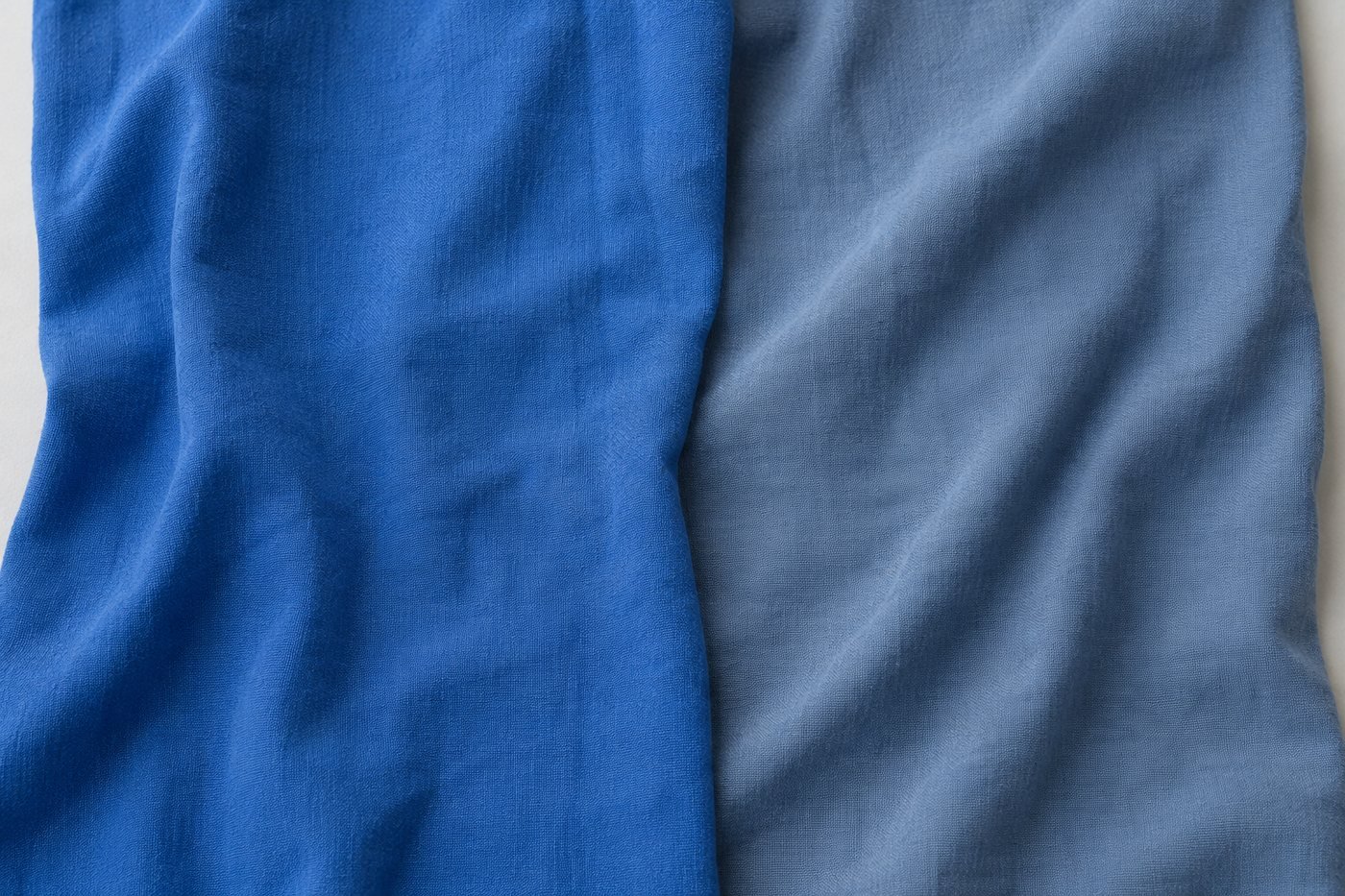
How three sub-seasons work
Each parent family has three children, named for the way their coloring sits within the family:
- — Spring: Light Spring, True Spring, Bright Spring
- — Summer: Light Summer, True Summer, Soft Summer
- — Autumn: Soft Autumn, True Autumn, Deep Autumn
- — Winter: Bright Winter, True Winter, Deep Winter
The "True" version of each family is the purest expression — that person sits at the center of the family. The other two sit on either side, lean toward an adjacent family, and pick up some of that family's character. A Bright Spring borrows clarity from neighboring Winter; a Soft Summer borrows muted earthiness from neighboring Autumn. This is why neighboring seasons share more than the names suggest.
A Walking Tour
Each season has its own dedicated page with the full palette, wardrobe guide, and colors to avoid. The short profiles below give you the feel of each — click through for the detailed view.
Spring
Light Spring →
Warm + light + clear
The lightest, most sunlit version of warm coloring. Light Springs often have strawberry-blonde or golden-blonde hair, fair freckled skin that tans honey-gold, and clear blue, green, or aqua eyes. Their palette is soft pastels with a warm cast — peach, butter yellow, coral, fresh aqua, warm ivory. Think of an English garden in early May.
True Spring →
Warm + medium + clear
The purest expression of Spring — warm, clear, sunlit, neither too light nor too deep. True Springs often have golden or auburn hair, warm peach skin, and warm blue, green, or hazel eyes. The palette runs to true coral, golden yellow, leaf green, warm aqua, peach, and bright orange-reds. The mood is fresh, vital, optimistic.
Bright Spring →
Warm-leaning + medium + very clear
Spring at its most saturated. Bright Springs have just enough cool in their undertone to handle jewel-bright colors that pure True Spring would find overwhelming. Coloring is often striking — bright eyes against medium skin, with hair that can run from warm chestnut to dark blonde. The palette is hot pink, electric turquoise, true emerald, sunshine yellow, warm true red.
Summer
Light Summer →
Cool + light + soft
The lightest of the cool seasons — and one of the most common. Light Summers often have ash-blonde or light brown hair, fair pink-toned skin, and clear blue or grey eyes. The palette is powder pink, periwinkle, soft lavender, dusty mint, light grey, and cool light blues. The mood is gentle, watercolor-soft, English.
True Summer →
Cool + medium + soft
The purest Summer — cool, soft, slightly dusty. True Summers often have ash brown hair, neutral-cool skin with a pink undertone, and greyed blue or grey-green eyes. The palette runs to dusty rose, slate blue, soft burgundy, plum, sage grey, and powder pink. Think of a misted English garden in late afternoon.
Soft Summer →
Cool-leaning neutral + medium + most muted
Summer at its most muted — almost smoky. Soft Summers have a slight warmth in their neutral undertone, which is why their palette can include soft mauve, dusty teal, mocha, and warm-leaning greys alongside the typical Summer cool tones. Coloring is harmonious and low-contrast. The mood is quiet, refined, never loud.
Autumn
Soft Autumn →
Warm-leaning neutral + medium + most muted
The mirror of Soft Summer — a softened, muted Autumn with just enough cool in the neutral undertone to make pure Autumn colors feel a touch much. Soft Autumns often have warm brown or dark-blonde hair, neutral skin with a warm cast, and hazel or muted green eyes. The palette is honey, sage, dusty terracotta, soft mustard, warm mocha, and muted teal.
True Autumn →
Warm + medium + muted
The purest Autumn — warm, earthy, settled. True Autumns often have rich auburn, chestnut, or warm dark brown hair, golden-warm skin, and amber, hazel, or warm brown eyes. The palette runs to rust, mustard, olive, deep teal, terracotta, and warm browns. The mood is woven, golden-hour, harvest.
Deep Autumn →
Warm + deep + muted
Autumn at its richest and most saturated. Deep Autumns have warm undertones with serious pigment depth — often deep brown or black hair with warm highlights, deep eyes, and skin that can be fair to deep. The palette is the most opulent of the Autumns: aubergine, deep rust, forest green, claret, deep teal, and chocolate. The mood is rich, regal, autumnal in the fullest sense.
Winter
Bright Winter →
Cool-leaning + medium-deep + very clear
Winter at its most saturated and electric. Bright Winters have a slight warmth in their neutral undertone, which is why their palette runs more saturated and slightly less icy than True Winter's. Coloring is often striking and high-contrast — bright eyes, defined dark hair, fair-to-medium skin. The palette is hot pink, true emerald, electric blue, true red, and crisp white against deep black.
True Winter →
Cool + deep + clear
The purest Winter — cool, clear, dramatic. True Winters often have deep cool brown or true black hair, neutral-to-cool fair skin, and clear cool eyes. The palette is the most defined of the four families: pure black, pure white, true red, royal blue, icy pink, jewel-tone purple. The mood is glacial, regal, exact.
Deep Winter →
Cool + deep + clear
Winter at its richest. Deep Winters have the deepest pigment density of any season — black or near-black hair, deep cool eyes, and skin that can range fair to deep. The palette is dramatic: black, true white, true red, deep emerald, sapphire, plum. Where True Winter is glacial, Deep Winter is jewel-box opulence.
How seasons relate to each other
The twelve seasons sit on a wheel, not a list. Each is adjacent to two others, and opposite a third, and that geometry tells you a lot about what will work on you and what will not.
Adjacent seasons share two of three readings with yours. A Soft Summer sits next to Soft Autumn — both are "soft" (muted), and both sit near neutral on the warm-cool axis. Soft Autumn's palette will look acceptable on a Soft Summer, just not as flattering as her own. Adjacent seasons are why "off-season" thrifting still works — a piece in your neighbor's palette is rarely a disaster.
Opposite seasons share nothing with yours and are what you most want to avoid. Soft Summer's opposite is Bright Spring; what makes Bright Spring sing (warm-clear-saturated) is exactly what makes Soft Summer look tired (it asks for cool-soft-muted). If you have ever put on a sweater that looked stunning in the store and made you look ill at home, you were probably looking at an opposite-season color.
"True" sister seasons across the wheel — True Spring and True Autumn, or True Summer and True Winter — share warmth or coolness but differ on every other axis. They are an interesting case: a True Spring putting on a True Autumn color looks all right, because both are warm, but the depth and chroma feel off.
It is not arbitrary, and it is not opinion — it is observation, refined over forty years.
Why the system works
The reason a "right" color makes you look fresher and a "wrong" color makes you look tired is not aesthetic preference. It is the physics of light bouncing off fabric and onto your face.
Your skin, hair, and eyes are already a palette — a set of pigment values held more or less constant from birth. When you put on a color, that fabric reflects a portion of the light hitting it onto your face, slightly tinting your skin in that color's hue. If the tint harmonizes with your existing palette, you look more "yourself"; if it fights your palette, your skin reads sallow, sickly, or washed out.
The 12-Season system is the most refined empirical model of which color families harmonize with which natural palettes. It is not arbitrary, and it is not opinion — it is observation, refined over forty years of practitioner work.
Frequently asked
Can I be more than one season?
You are one. But seasons sit on a spectrum, and most people who land near the boundary between two seasons can wear the palette of either with decent results. Your true season will give you the best results; the adjacent one will be fine. The opposite season — across the wheel — is what to avoid.
What if I change my hair color?
Your season does not change. Hair dye changes the picture but not the underlying canvas — your skin undertone and eye color stay the same, and those drive most of the classification. That said, going from natural brown to platinum blonde can shift which colors look best on you in practice, because hair is part of what people see when they look at you. Read the system as your "best fit," not your "only fit."
Are these seasons related to the season I was born in?
No. The names come from color theory — Spring colors are warm and clear, Summer colors are cool and soft, and so on. It is metaphor, not astrology. You can be a True Winter born in July.
Why does my friend look amazing in colors that look terrible on me?
Different season. The same emerald green that lights up a Bright Winter will make a Light Summer look tired and washed out. This is the whole reason the system exists — to give you the colors that work on your specific palette rather than your friend's.
How accurate is online color analysis compared to in-person?
A well-built online reading — sampling actual color values from a portrait taken in good light — gets to the right season about ninety percent of the time. An in-person draping with a trained consultant gets there ninety-five to ninety-eight percent of the time, with the advantage of being able to test edge cases live. For most people, the online reading is good enough; if you are between two seasons, the home draping in our companion guide is a useful tiebreaker.
Find Yours
One of the twelve
is yours.
The Your Style Hue reading measures your undertone, depth, and chroma from a portrait and matches you to one of the twelve. About a minute. Free. Your photograph never leaves your device.
Find my colors